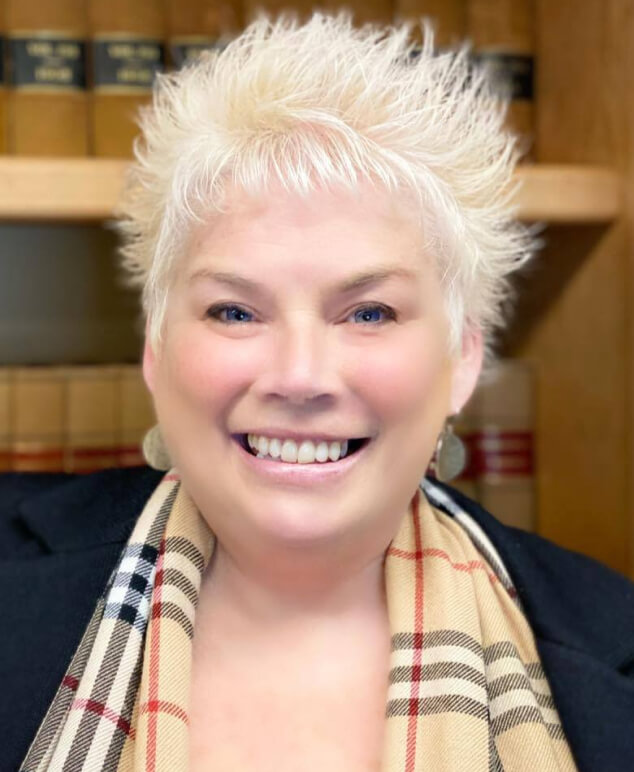
Aggressive Boston Criminal Defense Attorney
Rosemary C. Scapicchio is an aggressive, experienced criminal defense attorney known for her decades-long career marked by exceptional expertise and unwavering dedication. Attorney Scapicchio will do everything in her power to represent you as zealously as the law allows.
Attorney Scapicchio is a fierce advocate for her clients who have been wrongfully charged or convicted of serious felonies. Her relentless pursuit of the truth has earned her the respect of her clients, their families and friends, as well as colleagues and the judiciary.
Results
Calvin Carnes Was Convicted of Killing His Four Friends. The Real Killer Confessed to Multiple People, Wrote a Forged Confession to Frame Calvin, and the Prosecution Buried It All. 18 Years Later, We’re Fighting to Bring Him Home.
I. WHY THIS CASE MATTERS
Calvin Carnes, Jr. has spent nearly two decades in prison—serving four consecutive life sentences without the possibility of parole—for a crime that the evidence overwhelmingly suggests was committed by his co-defendant, Robert Turner. On January 29, 2026, Carnes filed his Second Motion for New Trial in Suffolk County Superior Court, a 112-page filing that presents one of the most compelling cases of wrongful conviction currently pending in the Massachusetts courts.
This case is not merely about one innocent man. It is a window into a systemic failure within the Suffolk County District Attorney’s Office, where the prosecutor who tried this case, former-ADA Joshua Wall, also served as First Assistant District Attorney overseeing all Superior Court prosecutions. During his tenure, at least thirteen men convicted of murder have since been exonerated after the SCDAO withheld evidence and opposed post-conviction discovery—a track record that stands in devastating contrast to Judge Brady’s characterization of Wall’s “exemplary” performance and the office’s “high degree of professionalism” including reducing Brady violations.
The Carnes case involves every hallmark of a wrongful conviction: multiple confessions by the actual perpetrator that the Commonwealth concealed for years; massive undisclosed payments to the two key witnesses; a forged confession letter designed to frame the defendant; false forensic testimony; unauthorized juror investigations; interception of privileged attorney-client communications; and a motion judge who wrote a letter of recommendation for the very prosecutor whose misconduct was at issue—citing the Carnes case itself as proof of that prosecutor’s fitness for the bench.
II. THE CRIME AND THE PROSECUTION’S THEORY
On December 13, 2005, four young men were shot and killed in the basement of an apartment on Bourneside Street in Dorchester, Massachusetts. The victims were Calvin Carnes’s friends—aspiring rappers who used firearms as props in their music videos. Visitors to the basement frequently handled and borrowed these weapons.
The Commonwealth’s theory was that Carnes—a man with no prior criminal record and no history of violence—experienced a “spark of evil” and executed four of his friends in order to steal their firearms. Robert Turner, who according to the Commonwealth was present during the murders and who later sold the stolen guns, was charged only as an accessory after the fact and received a thirteen-year sentence after a proffer session with prosecutors.
The case against Carnes rested almost entirely on the testimony of two witnesses: Cynthia Small (Turner’s girlfriend) and Maria Ortiz. Both women claimed Carnes confessed to them. What the jury never learned was that the Commonwealth paid Small $19,843 and Ortiz $26,100 for their cooperation—extraordinary sums that were deliberately concealed from the defense and affirmatively misrepresented in the Commonwealth’s Certificate of Discovery Compliance. Trial counsel has now provided an affidavit confirming she never received this evidence and would have changed her entire trial strategy, had she known.
On June 18, 2008, after nine days of deliberation, a jury convicted Carnes on all counts. He was sentenced to four consecutive terms of life without parole. He has maintained his innocence from the moment of his arrest.
III. THE REAL KILLER: ROBERT TURNER’S CONFESSIONS AND FRAME-UP
The evidence that Robert Turner—not Calvin Carnes—committed the Bourneside Street murders is overwhelming and comes from multiple independent sources. The Commonwealth possessed much of this evidence before trial and withheld it; additional evidence surfaced post-conviction but was strategically delayed for up to eighteen months.
A. Three Independent Witnesses Heard Turner Confess
Craig Smith, Brian Cavitt, and Felix Cruz—three incarcerated individuals who did not know each other and had no connection to Carnes—each heard Turner confess to the murders at different times and different facilities.
Craig Smith: Turner approached Smith and told him he was “the guy who murked the guys in the basement.” Turner said he lied to police and the District Attorney, and blamed the murders on “Cal.” Turner provided Smith with a detailed account: Carnes had taken Turner to the basement to see if the men would sell their firearms. When they refused, Carnes stepped outside to smoke. While Carnes was outside, Turner asked to see a 9mm handgun, then turned it on the four men and shot them before stealing the remaining weapons. Smith wrote to the SCDAO on February 9, 2009, to report Turner’s confession. The Commonwealth sat on this information for eighteen months.
Brian Cavitt: Cavitt, who was housed in the cell next to Turner, witnessed two separate incidents where inmates confronted Turner as a “lying ass rat.” Turner responded by saying, “So what if I lied, I’m going home, you’re not,” and, critically, “How is Cal the gangster if I did all the shooting?” The second incident occurred just one day before Turner’s suicide.
Felix Cruz: Turner approached Cruz at the Nashua Street Jail before Carnes’s trial and asked if Cruz could contact “Cynthia and Maria”—the two key prosecution witnesses—because they were from Roxbury. Turner also tried to sell Cruz an AK-47 and a Glock (the stolen murder weapons). After Cruz refused, Turner moved down the tier and told another inmate he had “bodied” (murdered) “all four of them.”
All three witnesses provided consistent accounts across their investigator interviews, police interviews, and testimony during the evidentiary hearing. None asked for compensation. None wavered under vigorous cross-examination by the Suffolk County District Attorney’s Office. Smith had never even met Carnes.
B. Pre-Trial Confession Evidence the Commonwealth Concealed
Even more damning, the Commonwealth possessed evidence of Turner’s confessions before trial and never disclosed it. In October 2007 and November 14, 2007—months before the May 2008 trial—two individuals (identified as “KW” and “KJ”) contacted the SCDAO to report that Turner had confessed to them in detail, including information about where the firearms went after the murders. KW referenced an associate named “Guapo” as a possible participant—a name never associated with Carnes. KJ’s attorney wrote to the Commonwealth offering a proffer session. This evidence was not disclosed to Carnes until January 9, 2013—over four years after conviction. It was not in the Commonwealth’s paper file; it existed only in deleted computerized records.
C. The Forged Confession Letter
Turner wrote a letter to his girlfriend Cynthia Small, purporting to be from Carnes, in which “Carnes” confessed to the murders and expressed guilt and inability to sleep. The letter was returned to Carnes because the address was wrong: it was sent to “14 Ernest Street” instead of Small’s actual address at 16 Ernest Street. This same address error—“14” instead of “16”—appears on envelopes from Turner’s own letters to Small that the Commonwealth withheld until 2012.
A handwriting expert, Paul H. McDonald, examined the confession letter alongside known writing samples from both Carnes and Turner, excluding Carnes and concluded it was “highly probable” that Turner wrote the confession letter. Additionally, the unusual contraction “you’ll” (meaning “you all”) appears identically in both the forged confession letter (“I came to you’ll because I trusted you’ll”) and Turner’s suicide note (“I never meant 2 hurt you’ll”). The Commonwealth never hired a handwriting expert to dispute this finding.
D. Turner’s Suicide
On May 19, 2011—one day after inmates were confronting him as a “lying ass rat”—Turner was found hanging in his cell. His suicide note, which apologizes to his family (“Sorry if you feel this was cowardice move but as of late things go out of order. I never meant 2 hurt you’ll. But—”), ends abruptly after the word “But.” Turner had previously contacted Prisoner’s Legal Services, reportedly feeling despondent. His death eliminated the possibility of ever calling him as a witness.
IV. THE FULL SCOPE OF CONCEALED EVIDENCE
A. Massive Undisclosed Witness Payments
The Commonwealth paid its two key witnesses—the only witnesses who claimed Carnes confessed—a combined $45,943 ($26,100 to Maria Ortiz and $19,843 to Cynthia Small) through Memoranda of Understanding executed before trial. This information was never disclosed. Worse, the Commonwealth’s Certificate of Discovery Compliance affirmatively misrepresented the payments, claiming that witness protection services were provided to a person who “did not receive services at the time of her cooperation in this case” and that the need arose from “an unrelated case.” This was false and is now entirely contradicted by the documents the Commonwealth finally produced years after conviction. Trial counsel has now submitted an affidavit averring she never received this evidence and that it would have been critical to her cross-examination of these witnesses.
B. The Concealed Turner Proffer and Cooperation
Emails recovered during post-conviction discovery reveal that Detective Torres and a former ADA corresponded about a meeting with Turner and his attorney for a “possible proffer session” in May 2007. An unsigned proffer agreement dated June 12, 2007—eleven months before trial—was located in the SCDAO’s files. Despite the Commonwealth’s repeated denials that any proffer occurred, an email from Turner’s attorney to ADA Wall on January 31, 2008, discusses Turner’s story in terms suggesting the Commonwealth was already familiar with it. None of this was disclosed to the defense.
C. Interception of Privileged Communications
Emails revealed that Detective Rock was listening to Carnes’s and Turner’s jail phone calls—including calls with attorneys—without warrants or subpoenas. Rock wrote to the prosecutor that “both of them have been told by their attorneys not to discuss things over the phone.” Rock also arranged for interception of Carnes’s and Turner’s mail. None of these intercepted communications were ever disclosed. The intrusion into attorney-client privileged communications is itself a constitutional violation warranting a new trial.
D. Coaching Forensic Analysts
A withheld email from the former ADA to a forensic analyst during grand jury proceedings asked for “any suggestions” on how to link Carnes to the crime through DNA evidence, noting that “any corroboration of their alleged presence by way of objective, forensic DNA evidence would be huge, huge, huge—especially in front of a jury.” This communication, in which the prosecutor essentially asked a scientist to help build the case rather than objectively analyze evidence, was never disclosed.
V. FALSE CELL TOWER TESTIMONY
The Commonwealth used cell tower evidence at trial to place Carnes near the murder scene and to undercut his alibi that he was at 79 Florida Street. Detective Torres and Alexis Eon from Verizon testified that Carnes’s phone was connecting to a specific cell tower near the crime scene. A defense expert, Mark McFarland, has now provided an affidavit demonstrating this testimony was patently false.
The Verizon records admitted at trial showed only which switch the calls connected to—not which cell tower. Each switch corresponds to between three and ten cell towers spanning several miles. It was therefore impossible to determine which cell tower—let alone which location—the calls connected to during the time of the murders. Neither Torres nor Eon had the qualifications to interpret cell site location data, and their testimony should have been excluded entirely. Torres was an impermissible “substitute expert,” testifying to opinions based on hearsay conversations with a Verizon employee whom Carnes never had the opportunity to confront or cross-examine.
VI. UNAUTHORIZED JUROR INVESTIGATION
At the outset of jury empanelment, ADA Wall represented to the court that he had obtained criminal records for all potential jurors but had “not looked at them”—consistent with the procedure outlined by the SJC in Commonwealth v. Cousin. The SJC relied on this representation on direct appeal.
Documents in the Commonwealth’s file, however, tell a different story. The juror lists are color-coded: green for minor infractions, blue for restraining orders, red for felony appearances or multiple defaults, and yellow for jurors “plotted on map.” ADA Wall could not have created this color-coding system without actually reviewing each potential juror’s criminal record—directly contradicting his representation to the court. This gave the Commonwealth an undisclosed tactical advantage in jury selection and raises serious questions about discriminatory use of juror information. Had trial counsel learned of this, she would have moved to strike the entire venire.
VII. THE MOTION JUDGE’S DISQUALIFYING CONFLICT OF INTEREST
Judge Brady, who presided over both Carnes’s trial and his first motion for new trial, wrote a letter of recommendation supporting ADA Wall’s application for a judgeship—specifically citing the Carnes case as evidence of Wall’s “exemplary” prosecution. In this letter, Judge Brady praised Wall for instituting “an open file philosophy on discovery” and credited him with the “high degree of professionalism” reducing the number of Brady violations within the SCDAO. These statements were made just ten months after Judge Brady denied Carnes’s motion for new trial—a motion centered on Wall’s failure to disclose exculpatory evidence.
The timeline is deeply troubling. Judge Brady denied Carnes’s motion for new trial and discovery requests in October 2013—before the evidentiary hearing was even complete—and then authored a recommendation letter for Wall in August 2014. He denied Carnes the opportunity to call Wall as a witness, denied further discovery, and denied a further evidentiary hearing, while simultaneously vouching for Wall’s integrity and the SCDAO’s professionalism. As a federal magistrate judge observed in summarizing Carnes’s habeas claims, “any bias on the part of the trial judge in favor of the Commonwealth would be of critical importance.”
Judge Brady’s findings are internally inconsistent in ways that betray this bias. He found Craig Smith’s testimony “not credible” because Smith had a criminal record—yet the Commonwealth relied favorably on testimony from Randy Furtado, a convicted armed robber and drug dealer, in a separate case where Furtado was cooperating with the Commonwealth. Apparently, incarcerated witnesses are credible only when they assist the government.
VIII. THE CARNES CASE WITHIN A SYSTEMIC PATTERN
The motion documents that the Carnes case is not an isolated incident but part of a systemic pattern of Brady violations and prosecutorial misconduct within the Suffolk County District Attorney’s Office. During ADA Wall’s tenure as First Assistant, when he supervised all Superior Court prosecutions, at least thirteen men convicted of murder have since been exonerated:
Cases tried during Wall’s tenure where evidence was withheld:
Keon Sprinkle (18 years served): Undisclosed benefits to key witness; coerced witnesses; actual shooter confessed multiple times.
Angel Toro (21 years served): Alternative suspect report suppressed for 21 years.
Shaun Jenkins (16 years served): $100 payment to grand jury witness never disclosed; 16 sets of cell phone records suppressed showing victim called his drug supplier five times on the day of the murder.
Jwainus Perry (22 years served; died during proceedings): Full scope of cooperating witness benefits not disclosed; witness later recanted.
Antwan Carter (12+ years served): DYS records proving key witness fabricated testimony were not disclosed; witness coerced through perjury indictment.
Clarence Williams (18 years served): Actual perpetrators made multiple confessions; key witness recanted, saying police threatened to implicate him.
Cases where the SCDAO opposed post-conviction discovery during Wall’s tenure:
Ricky McGee (28 years served): $25,000 reward to key witness concealed for 27 years.
Shawn Drumgold (14 years served): Prosecution hid witness deals; Commonwealth itself ultimately moved to vacate.
Paul Robinson (53 years served): Grand jury testimony showing co-defendant was the shooter suppressed for over 50 years.
Anthony Mazza (47 years served): Same suppressed grand jury testimony as Robinson.
Sean Ellis (22 years served): FBI informant reports showing victim detective was corrupt were suppressed; lead detectives later convicted of federal crimes.
Robert Foxworth (29 years served): Informant report identifying actual killer suppressed for 25 years.
Clarence Williams (18 years; also listed above): Post-conviction process delayed 15 years while evidence of actual perpetrators existed.
These cases collectively represent over 400 years of wrongful incarceration. The pattern directly contradicts every claim Judge Brady made in his letter of recommendation for Wall and underscores the institutional failure that allowed Carnes’s conviction to stand.
IX. ADDITIONAL CONSTITUTIONAL VIOLATIONS
Exclusion from sidebar discussions: Carnes was excluded from all sidebar discussions throughout his trial without ever being informed of his right to be present and without any waiver colloquy. He did not learn he had this right until, during deliberations, a substitute judge invited him to sidebar. The failure to secure a knowing, intelligent waiver of this fundamental right violated his Fifth, Sixth, and Fourteenth Amendment protections.
Missing trial records: An entire day of jury empanelment and the official recording of Judge Brady’s jury instructions are missing from the record. Carnes cannot adequately address claims relating to the empanelment process (including the Commonwealth’s unauthorized juror investigation) or the jury instructions without these records. Forcing Carnes to reconstruct the record using notes from the prosecutor who engaged in misconduct and counsel who was ineffective violates his right to meaningful appellate review.
Ineffective assistance of counsel: Trial counsel failed to investigate the forged confession letter, failed to hire a handwriting expert, failed to present a third-party culprit defense, failed to consult a cell tower expert, and failed to object to the false cell site location testimony. Trial counsel’s own affidavit confirms these were not strategic decisions. She did not appreciate the need to investigate because the Commonwealth had withheld the very evidence that would have revealed these avenues of defense.
Piecemeal disclosure denying full appellate review: The Commonwealth’s strategy of disclosing exculpatory evidence in fragments—withholding Turner’s confession for eighteen months until after appellate briefing and argument, producing witness payment evidence four years post-conviction, revealing the Small letters six years after trial—denied Carnes the ability to present a complete picture to any single court. He was forced to raise claims piecemeal, foreclosing the comprehensive review that the cumulative weight of this evidence demands.
X. THE RELIEF REQUESTED AND THE PATH FORWARD
Carnes’s Second Motion for New Trial asks the court to grant a new trial or, in the alternative, to hold a new evidentiary hearing where all claims can be evaluated together by an unbiased judge. Carnes asks this court to reassess his first motion for new trial in light of Judge Brady’s documented conflict of interest, and to consider the newly discovered evidence—including the defense expert’s affidavit debunking the cell tower testimony, the color-coded juror lists demonstrating the Commonwealth’s unauthorized pre-empanelment investigation, and trial counsel’s affidavit confirming that the withheld evidence would have fundamentally changed the defense strategy.
The cumulative weight of the evidence is staggering. Multiple independent witnesses heard the actual killer confess. A handwriting expert confirmed the actual killer forged a confession letter to frame Carnes. The Commonwealth paid its two key witnesses nearly $46,000 and lied about it. The forensic evidence the prosecution used to undermine Carnes’s alibi was demonstrably false. The Commonwealth intercepted privileged attorney-client communications. The juror investigation violated the procedures the SJC relied upon in affirming the conviction. And the judge who denied relief was actively championing the career of the very prosecutor whose misconduct was at the heart of the case.
Calvin Carnes has now spent nearly eighteen years in prison for a crime he did not commit. The real killer is dead. The evidence that could have saved Carnes was in the Commonwealth’s possession all along. Justice demands that this conviction be vacated.
* * *
For further information about the Carnes case or to discuss how your organization might assist, please contact:
Rosemary Curran Scapicchio, Esq.
Jillise McDonough, Esq.
Law Offices of Rosemary Curran Scapicchio
107 Union Wharf, Boston, Massachusetts 02109
(617) 263-7400
Another wrongfully convicted client freed.
Today, July 23, 2024, the SJC agreed with the arguments of Attorney Rosemary Scapicchio and Attorney Jillise McDonough and reversed Julio Baez’ first degree murder conviction and ordered that the Superior Court enter findings of not guilty on the charges of murder, armed assault to murder, and assault and battery with a dangerous weapon with serious bodily harm. We are thrilled that Julio will be reunited with his family after spending ten years in jail for a crime he didn’t commit.
We can’t wait to reunite Julio with his family!
Read More
Unfounded sexual assault allegations against a Tufts University student resolved
Attorney Rosemary Scapicchio was successful in her representation of a Tufts University student who was falsely accused of violating the university’s sexual consent policies. Throughout the Title IX hearing process, Attorney Scapicchio relentlessly advocated for her client, who was ultimately exonerated of all charges and was able to attend is graduation ceremony.
Read More
Successful Motion to Suppress in a drug trafficking case
Attorney Scapicchio filed a motion to suppress in a drug trafficking case in Bristol County – Fall River Superior Court and was successful in suppressing a search warrant. Based on this success, the entire case against her client was dismissed.
Read More
Another Not Guilty – Two First Degree Murder Charges
Attorney Scapicchio secures another not guilty on a double homicide case. The Commonwealth claimed that Demetrius Moore shot and killed two people outside of a night club. Attorney Scapicchio’s aggressive cross examination of the Commonwealth’s witnesses demonstrated that Mr. Moore acted in self-defense. As a result, the jury found Mr. Moore not guilty on both indicted charges of First Degree Murder.
Read More
Two Years’ Probation on a Drug and Gun Case
Attorney Scapicchio secured a two-year probation sentence for a client who faced a mandatory sentence of 12 years in prison on drug trafficking and multiple firearms charges.
Read More
NOT GUILTY VERDICT in a homicide case in Bristol County
Attorney Scapicchio’s most recent victory in a Bristol County Superior Court murder trial was hard fought. The Commonwealth charged her client, Kali Hollingsworth, with murder, unlawful possession of a firearm, and unlawful possession of a loaded firearm. Her meticulous trial preparation and scrutiny of the evidence enabled her to challenge the Commonwealth’s case, witness by witness. Her cross-examination skills are unmatched because she simply never backs down. During the trial, she exposed law enforcement’s lack of investigation and failure to do their job. She challenged the video evidence, the gunshot residue evidence, and the lack of investigation into third-party culprit evidence.
Following a seven-day trial, the jury deliberated for less than 90 minutes before returning not guilty verdicts on all three charges. After nearly four long years of pre-trial detention, Mr. Hollingsworth was able to walk out of the Fall River Superior courthouse with his family by his side.
Attorney Scapicchio is a fierce advocate for all of her clients. She will never stop fighting for justice.
Read More
Sean Ellis’ wrongful conviction 8-part series
The eBay and Top Officials Named in Federal Lawsuit Filed by Rosemary C. Scapicchio
Areas of Practice
Our Attorneys
Rosemary Scapicchio
Criminal Defense AttorneyRosemary Scapicchio is an experienced criminal defense attorney based in Boston.
Read more…
Jillise McDonough
Criminal Defense AttorneyJillise McDonough is a criminal defense attorney and Associate with the Law Offices of Rosemary Curran Scapicchio.
Read more…
Nicole Scapicchio
Criminal Defense AttorneyNicole Scapicchio is a criminal defense attorney and Associate with the Law Offices of Rosemary Curran Scapicchio.
Read more…